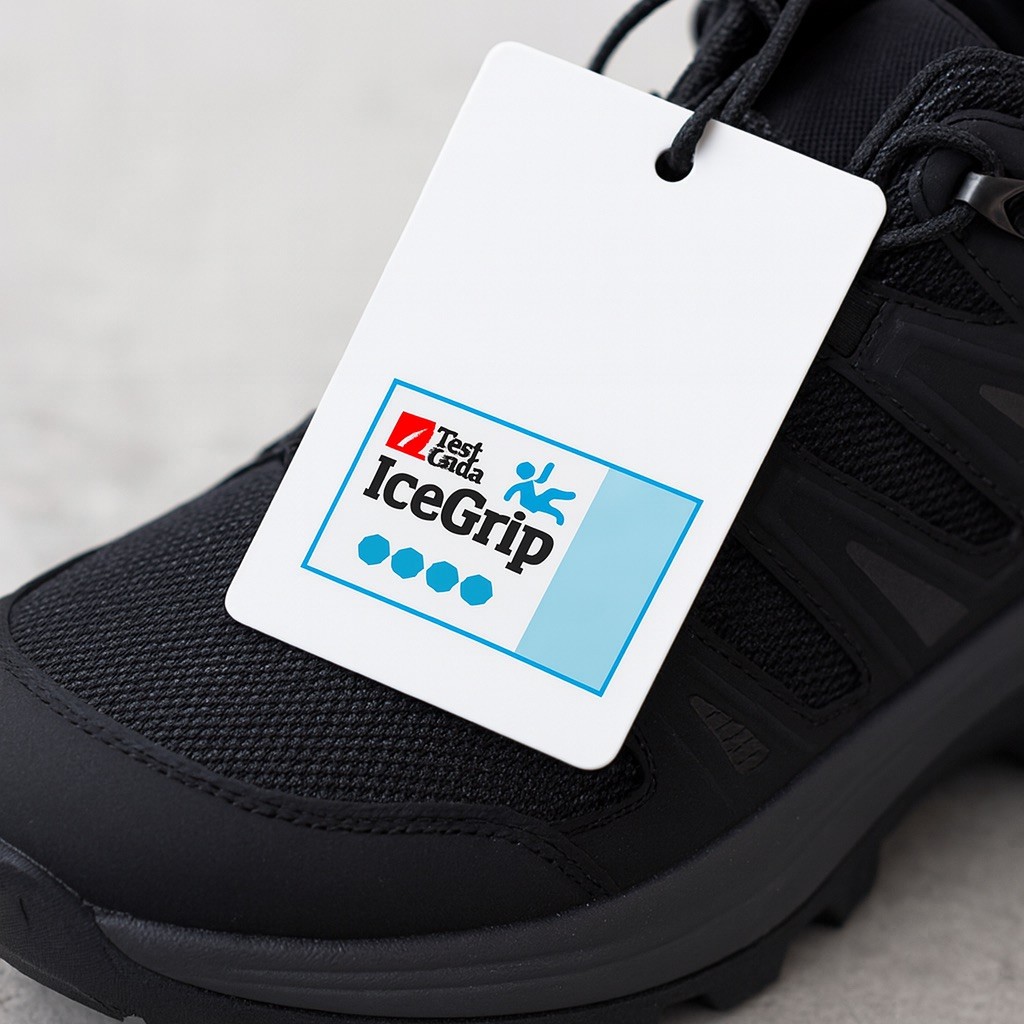
IceGrip is a new, independent labelling system from Testfakta that helps consumers and professional user groups choose shoes with documented good grip on ice. With measurements carried out by the state-owned research institute RISE, we offer manufacturers a transparent and credible way to demonstrate that their winter shoes meet the requirements when conditions turn icy.
The measurement is based on the new Swedish standard for ice grip, developed by KTH/RISE (SIS 657177:2024). The test is performed by RISE and provides an Ice Grip Index for each sole. Read more about the method here.
We have developed a simple and clear label for consumers:
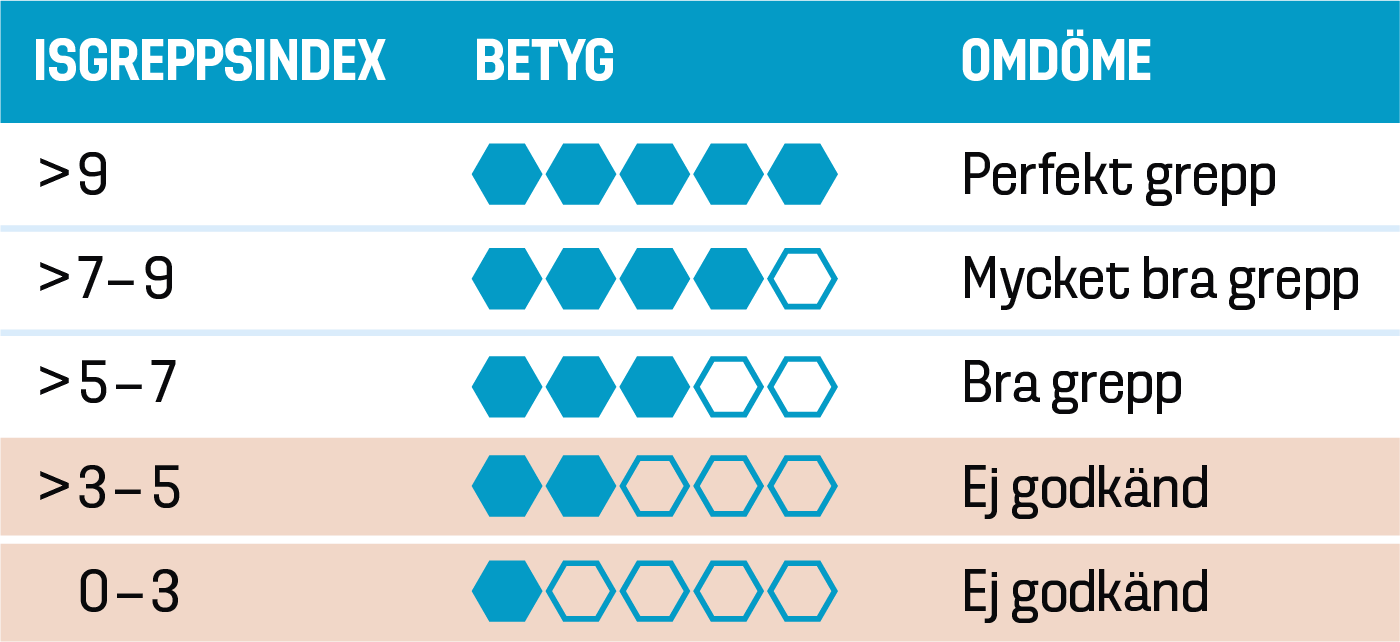
A sole with an Ice Grip Index > 5 can be approved and certified.
The manufacturer registers which shoes (and specific soles) are to be tested. We respond with the cost of the test and agree on the project scope.
The manufacturer sends two pairs of a shoe model with the specific sole to be tested (alternatively, loose soles if available).
RISE performs the ice grip measurement according to the standard. The measurement is carried out on a part of the sole that is cut out prior to testing.
Testfakta receives the report from RISE and, in consultation with RISE, determines which level of grip performance will form the basis for certification.
Ice Grip Index > 5 qualifies for Testfakta IceGrip.
Once certification has been approved, the manufacturer reports how many shoe models use the specific sole. We provide the cost for communication and the licence fee, and we agree on the communication and licensing terms.
If certification is of interest, the test result for the selected shoe models will be published on Testfakta’s footwear site www.icegrip.nu, with links from testfakta.se, and the manufacturer will gain access to the IceGrip label (high-resolution files for use on the shoe, labels, packaging, advertisements and other communication materials).
The certification is valid for 3 years for the same sole. If the material or tread pattern changes, a new test is required.

Test fee (mandatory)
EUR 1,500 per sole.
Since several shoe models often share the same sole, one test per sole design is sufficient — but the sole must be identical in both material and design.
Marketing fee
EUR 1,000 per shoe model using the sole.
This is a one-time fee covering:
Licence for the IceGrip label
EUR 1,200 per shoe model per year.
A fixed annual fee per shoe model using the certified sole. The rationale behind the pricing model is that:
| Test of the sole (one-time fee) | EUR 1 500 |
| Marketing package (one-time fee) | EUR 1 000 |
| Licence for IceGrip label (annual) | EUR 1 200 |
| Total cost year 1 | EUR 3 700 |
| Total cost year 2 | EUR 1 200 |
| Total cost year 3 | EUR 1 200 |