Every year, more than 25,000 people in Sweden are injured after slipping on ice or snow. According to a report from the Swedish National Road and Transport Research Institute (VTI), slip-and-fall accidents related to snow and ice cost society SEK 22 billion every year. Just over SEK 360 million can be attributed to direct costs such as hospital care, lost productivity and administration, while the majority is linked to psychological suffering and society’s loss of welfare in cases of fatalities.
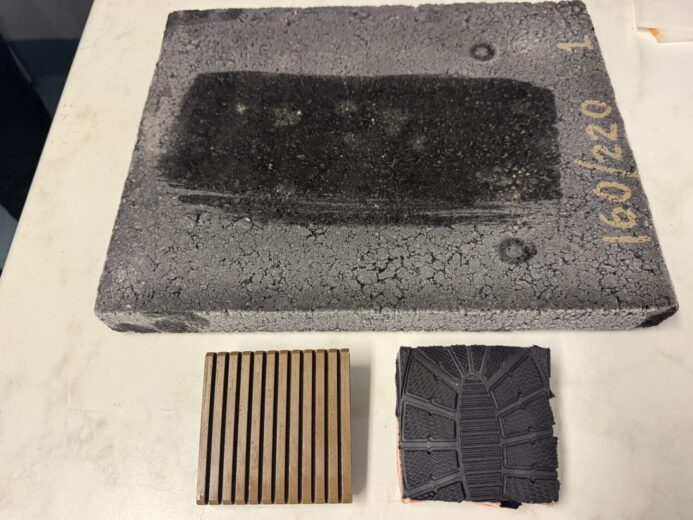
The risk of slipping decreases significantly if you wear the right type of shoes. That is why Testfakta, together with the Swedish research institute RISE, has initiated a project focused on high-grip footwear. The test method is an international standard developed by the Swedish research institute RISE to develop and verify what qualifies as high-grip winter footwear. The test produces an Ice Grip Index.
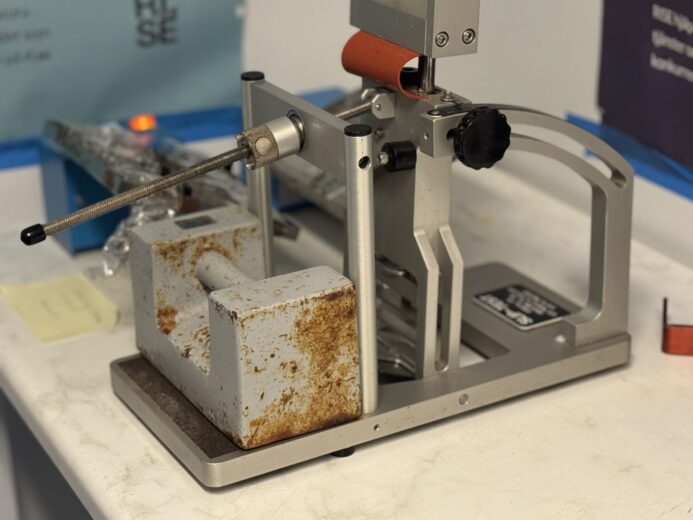
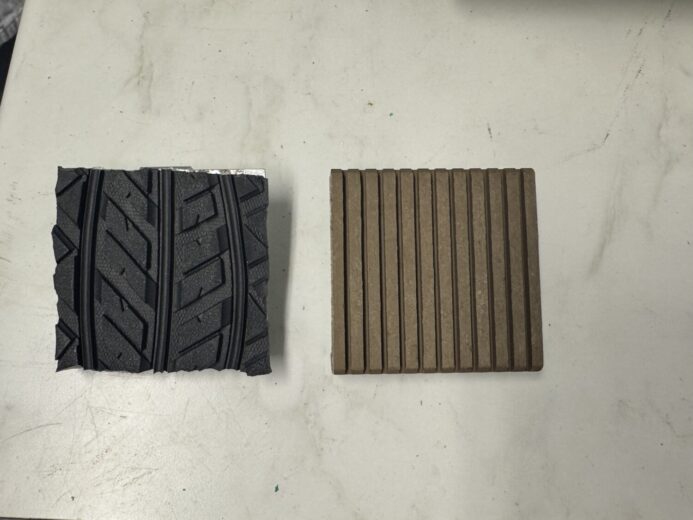
By measuring at what angle a sole pressed against a slippery surface no longer grips, it is possible to determine the shoe’s traction. The test is carried out using a tribometer in accordance with Swedish Standard 657177:2024 and can be divided into four steps:
The higher the angle the sole can withstand without slipping, the higher the Ice Grip Index.
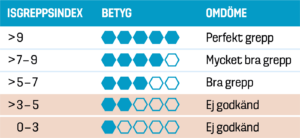
Testfakta has, based on the Ice Grip Index measurements, developed a labelling system for shoe traction on ice. In order to be classified as high-grip and recommended for winter conditions, the sole must have an Ice Grip Index above 5. The rating scale consists of five steps, where soles with a rating of 3 or higher (i.e. an Ice Grip Index above 5) are approved and may carry the Testfakta IceGrip label.
Thanks to participating companies and organisations
Testfakta would like to express its sincere thanks to the companies that have contributed shoes for the initial tests. The products were provided free of charge for testing purposes. Providing test samples has not influenced the selection, execution or assessment of the test. All products have been tested using the same methodology and evaluated independently and in a comparable manner.
The IceGrip project is partly funded through financial support from Skyltfonden, administered by the Swedish Transport Administration (Trafikverket). The positions, conclusions and working methods in the project and final report reflect Testfaktas views and do not necessarily align with Trafikverket’s positions, conclusions or working methods within the scope of the report’s subject area.